
About

Products
Freebies

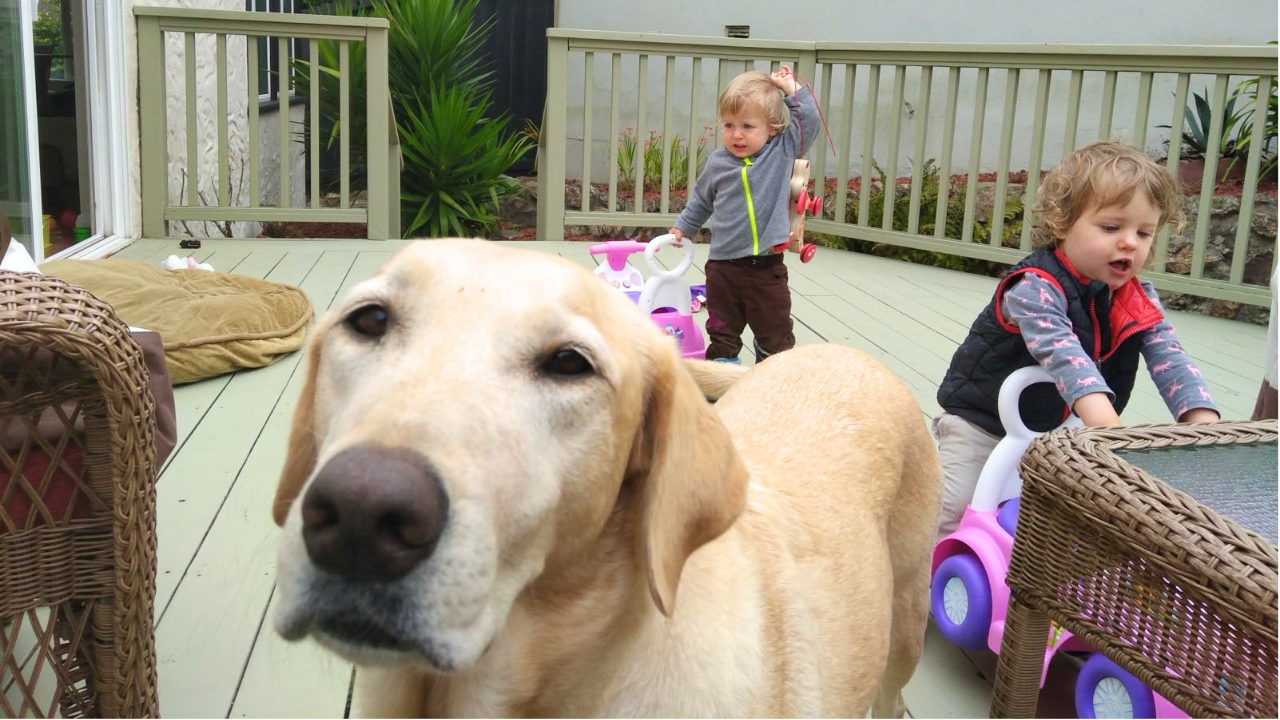
Every week at Dog Meets Baby, we receive the same three messages from parents (usually with a video attached):
“Is this interaction between my dog and child safe?”
“I feel like my dog doesn’t really like my baby. What can I do to help them?”
“My dog is always licking and approaching my child. Is that a good sign? Or should I stop my dog from doing it?”
If any of those sound familiar, you are in the right place. Understanding your dog's body language around your baby is one of the most important things you can do to keep your family safe and it's also one of the trickiest things to get right, even for experienced dog owners.
Dog body language is both simple and nuanced. It is fairly easy to learn the basics, like a lip lick, whale eye (where the whites of the eyes are showing), a dog moving away, or a happy "helicopter" tail wag. The second step—and where it gets complicated—is taking into account the dog's entire body, the context of the interaction, and what you know about your individual dog.
I always tell parents that management is only as good as your knowledge of a dog's body language. If you are looking at your toddler kissing and hugging your dog and don't know what your dog is communicating with their body language, you might end up filming a snap or a bite. Sadly, this is a true story, and not just a one-time occurrence.
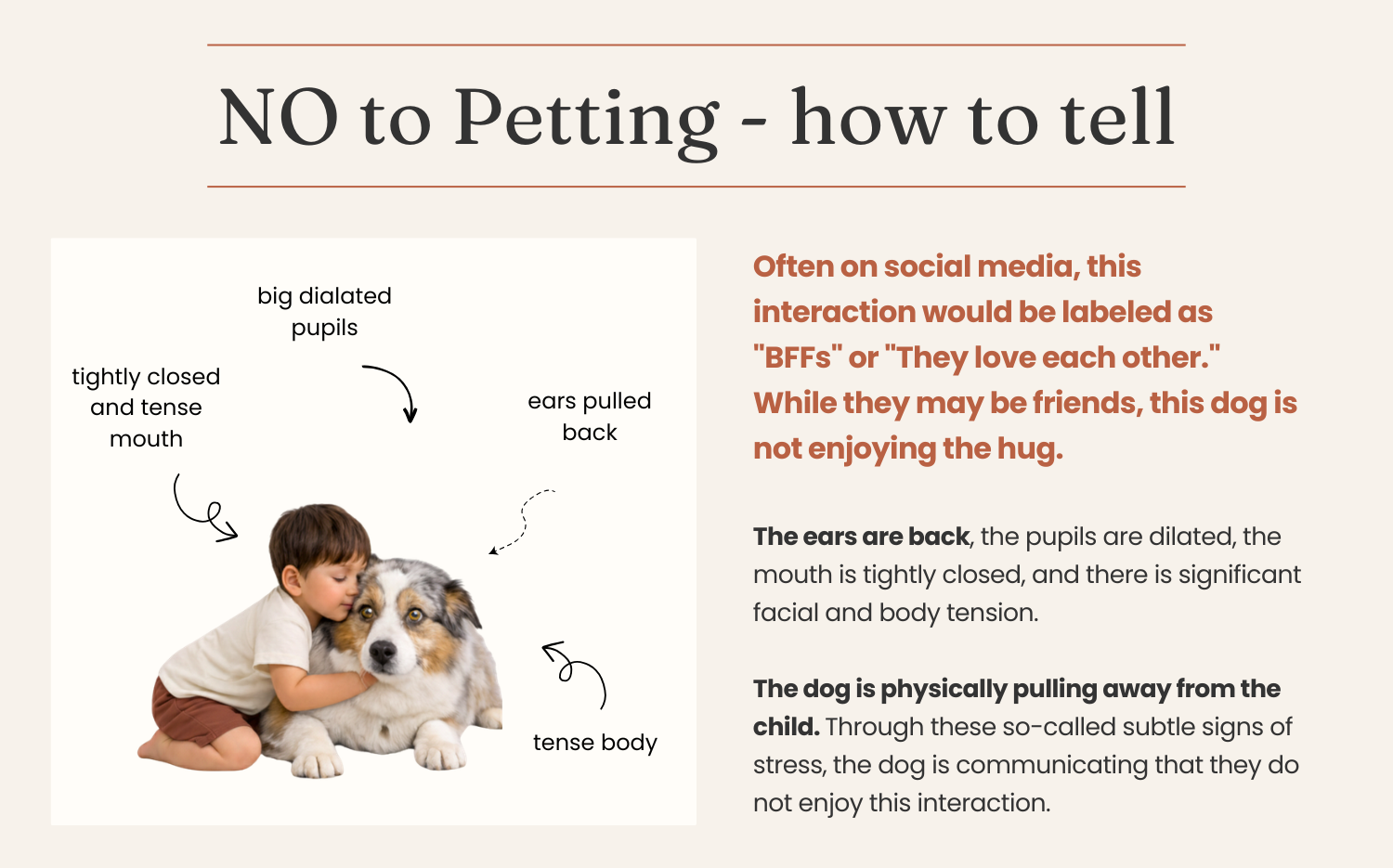
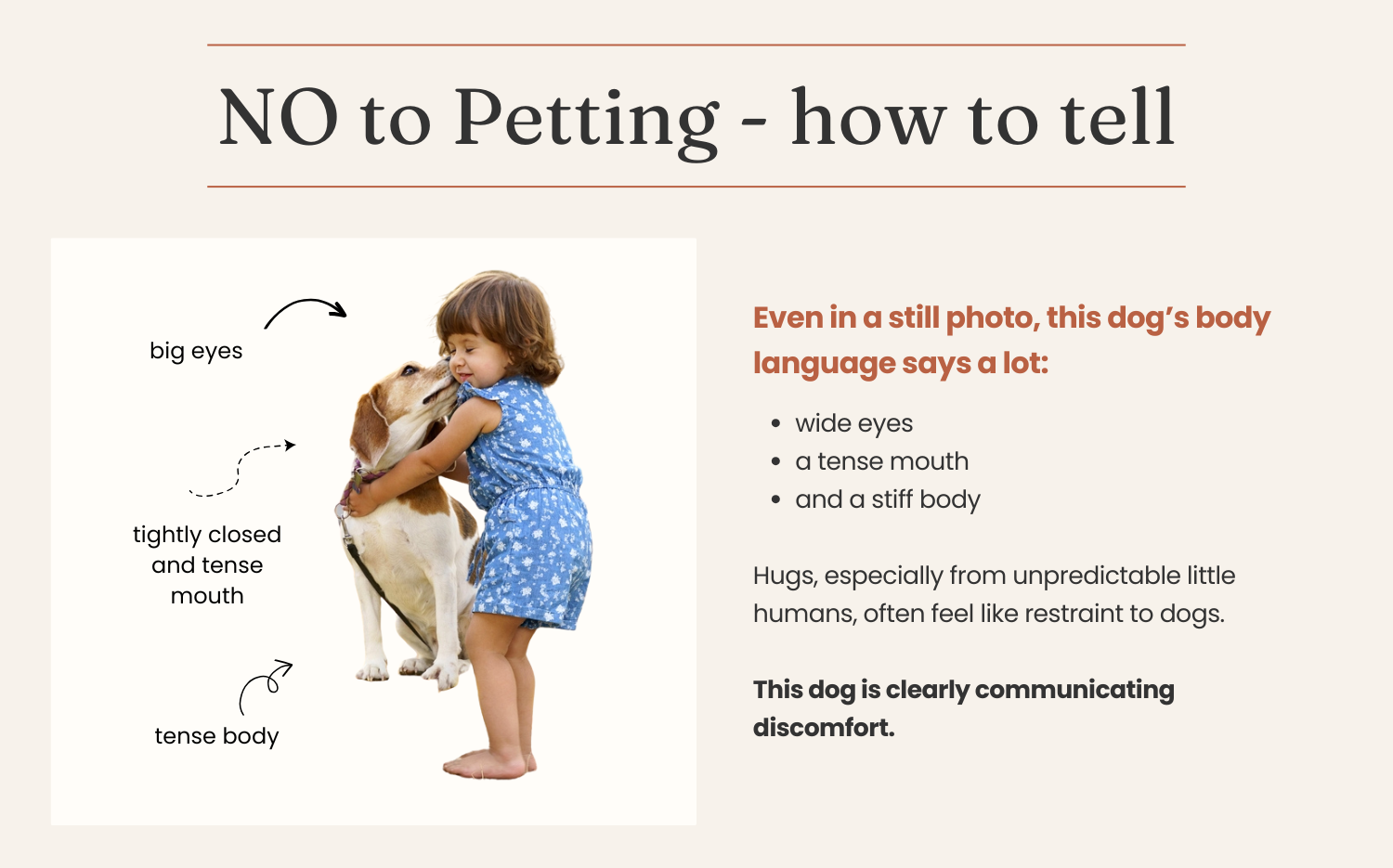
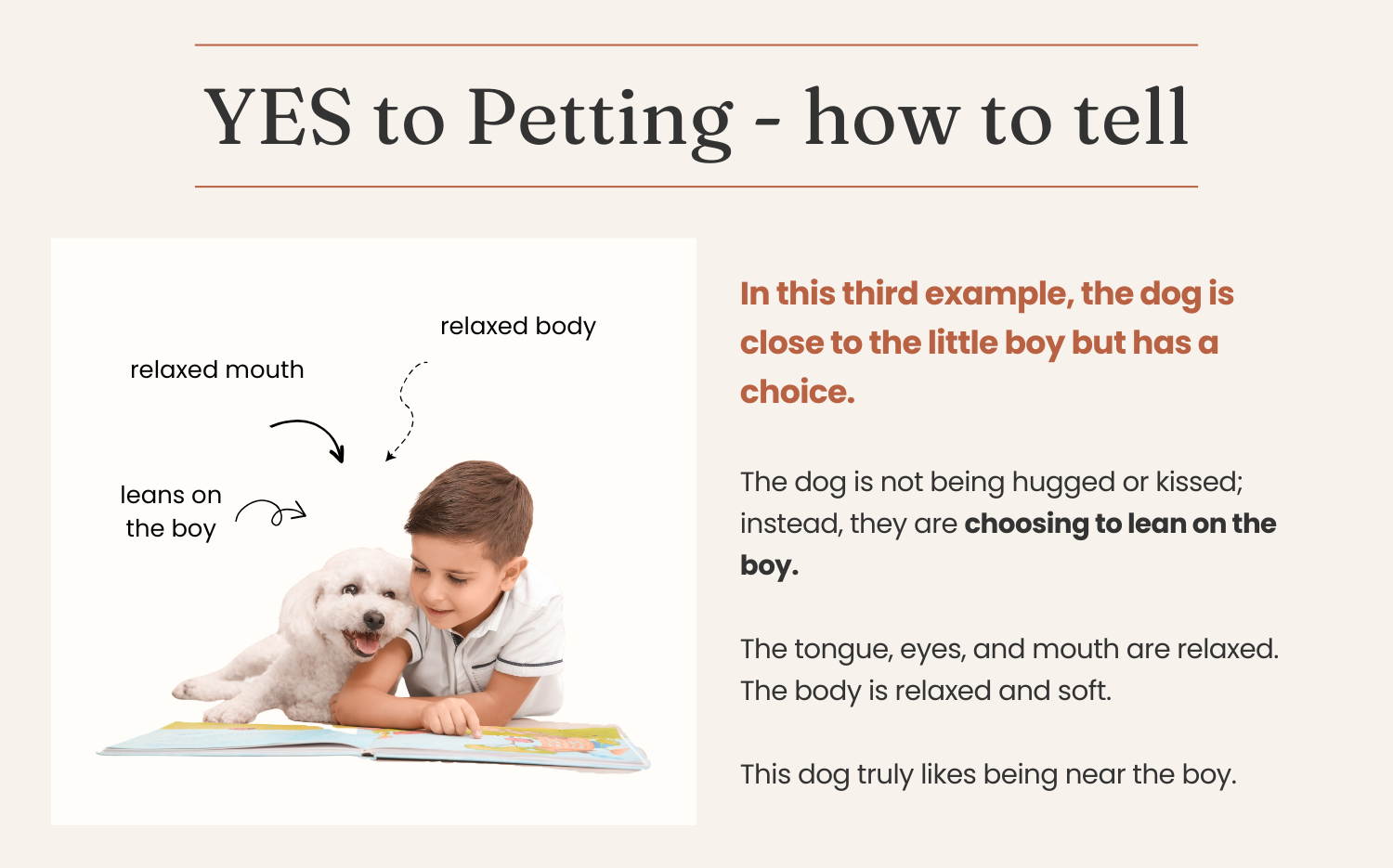
If you looked at those first two photos and thought they were 'sweet,' you aren't alone! Most people see a hug; they don’t see the tension.
Understanding the difference between a dog who is 'tolerating' and a dog who is 'enjoying' is the key to a safe home.
The good news: it's a skill you can learn. And there are several ways Dog Meets Baby can help you do exactly that — from free resources on Instagram, to online courses with real video examples, to personalised expert feedback on your own dog-and-baby videos.
There is no single resource that works for every family. So at Dog Meets Baby, we've built several layers of support — free resources you can access right now, in-depth courses for deeper learning, and personalized expert feedback when you need a second pair of eyes on your specific situation.
.png)
The best way to get better at reading dog body language is practice, and that's what our Dog Body Language Quiz is for. It trains your eye to spot whale eyes, stress yawns, lip licks, and the many meanings behind licking, through real scenarios.
Body language quizzes have always been a community favourite at Dog Meets Baby. Parents told us again and again how much they helped them actually see what their dog was communicating. The quiz is our way of making that learning permanent and accessible.
We also share regular body language breakdowns in our Instagram Reels. This Reel with Nora is one of our most-watched - a great starting point.
To provide a permanent resource, I created the Dog Body Language Course with videos generously shared by the parents from the Dog Meets Baby community.
In the course, I narrate each video, sharing what I observe. Arrows point out changes in the dog’s body language, with short descriptions, and each video ends with my recommendations for making the interactions safer.
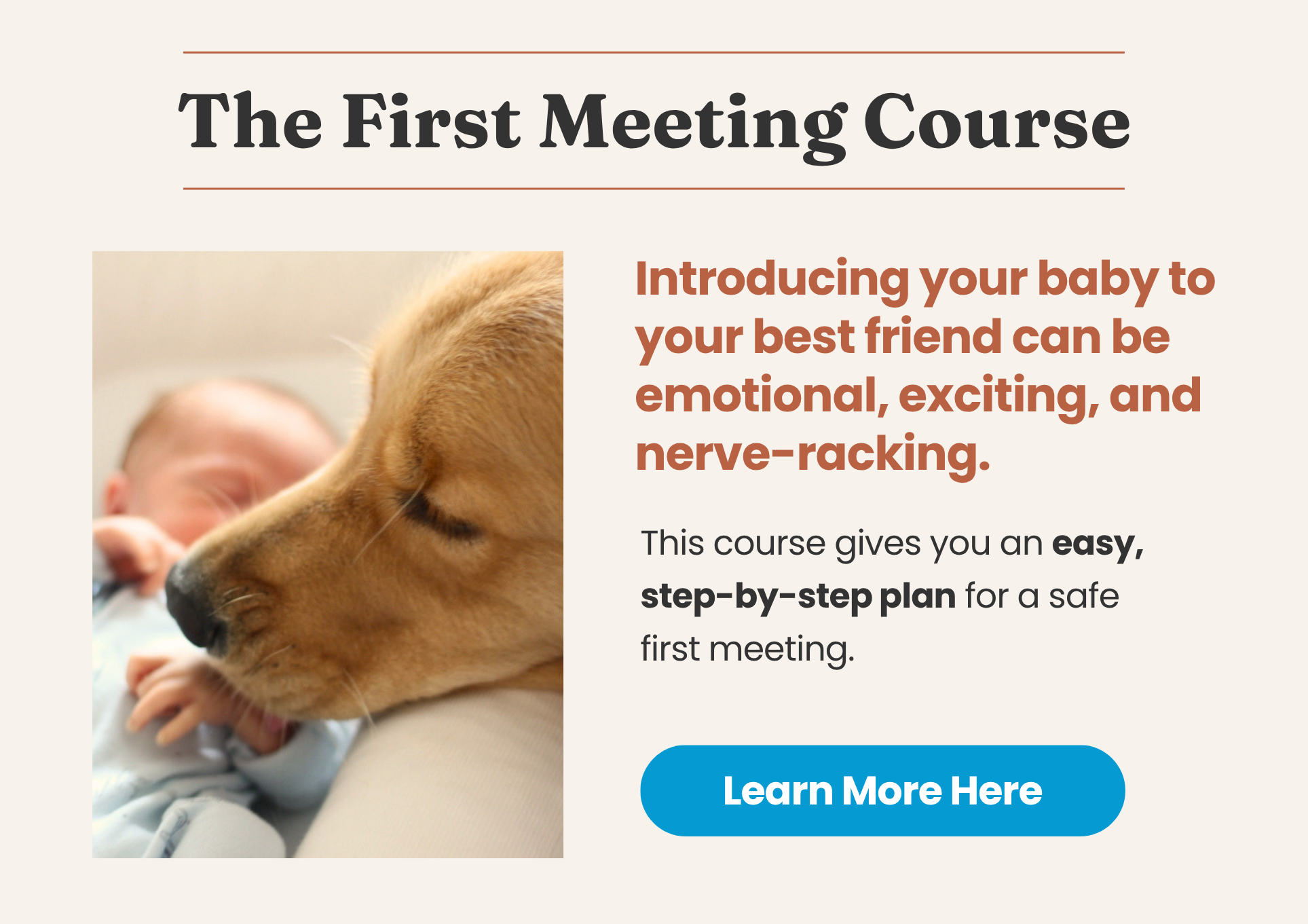
The moment your dog meets your newborn is so emotionally charged that it can be genuinely hard to tell if your dog is okay or not. The First Meeting Course is built for exactly that situation. The course includes baseline videos, so you can see what 'mildly unsure but fine' actually looks like, versus 'separate your dog immediately.' I want the parents to be present in that moment, not anxious about it.
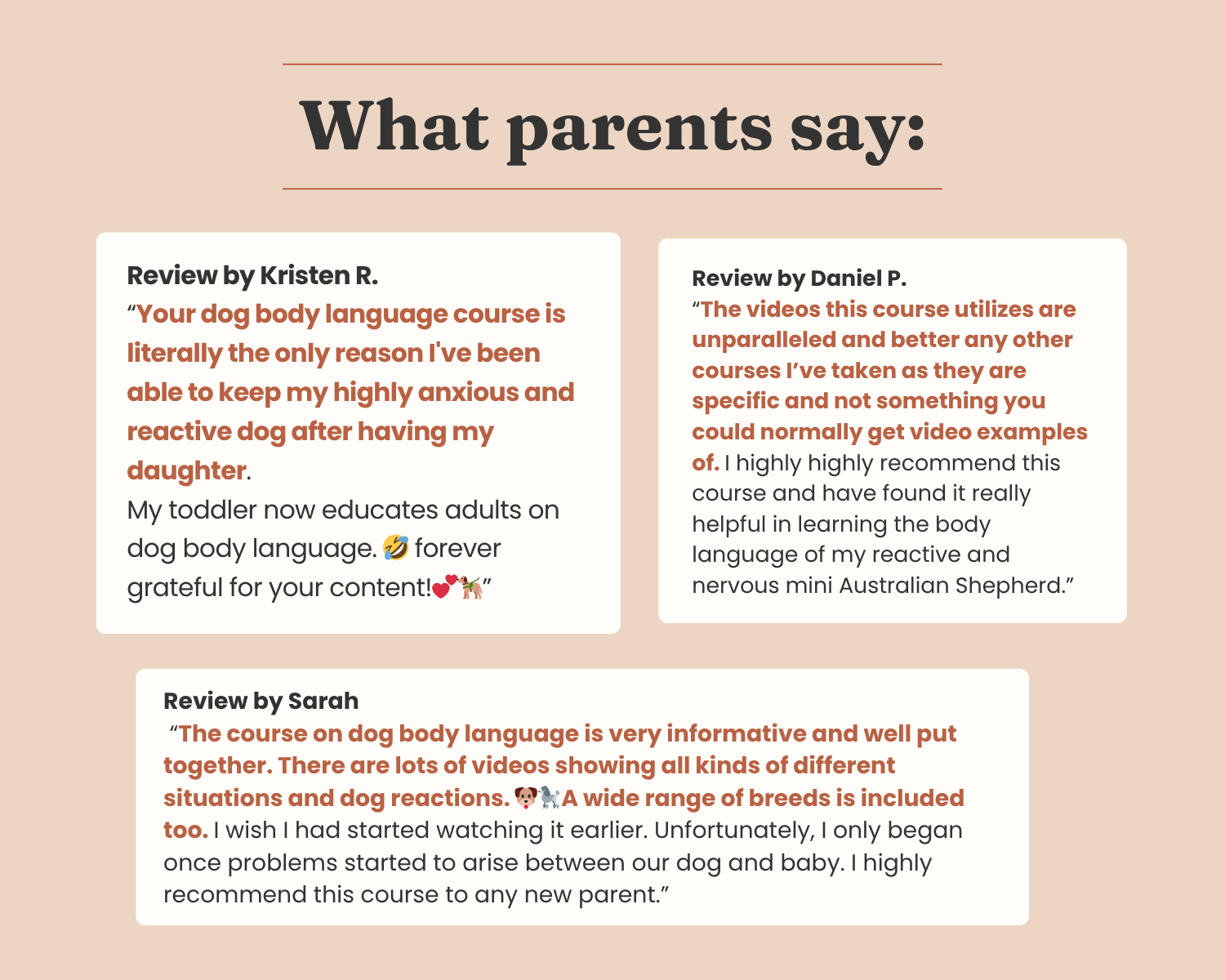
Based on the messages and reviews we have received, the videos in both courses have been invaluable in learning about and understanding your dog’s body language - which makes us so happy, as that is exactly why we created them!
The messages asking us for feedback on the videos never stopped…I have always analyzed videos in private consultations, but not everyone needs a full consultation, and it is not in everyone’s budget.
I 100% understand the need for feedback from an expert, because I reach out for help myself.
I graduated from the Academy for Dog Trainers, and we have a support group where the trainers share more complicated cases to get advice on. I have shared videos (with the parents’ permission) when I wasn’t sure about the dog’s communication, and having this support has been invaluable.
We brainstormed at Dog Meets Baby, and recently, launched a new service that is exactly what parents have been asking us for over the last 5 years.
What It Is
You submit up to three videos — up to five minutes total — and within five business days, you receive a recorded video analysis from a Dog Meets Baby trainer walking you through what they observe, what it means, and what specific next steps they recommend.
This service is perfect if you:
Common scenarios parents submit include:
How It Works

Important!
If your dog has a history of bites or has shown warning signs such as growling, lunging, showing teeth, or snapping, a private consultation is the more appropriate next step. We do not address medical issues.
When you need more than a moment-in-time analysis, you want a comprehensive look at your dog's history, your home setup, and a detailed long-term plan, a private consultation with Dominika is the right fit.
Private consultations are recommended when you're dealing with multiple concerns at once, need face-to-face support, or want a complete strategy rather than feedback on specific moments.
Both services offer expert Dog Meets Baby guidance — the difference is scope and format.
Online resources to help your baby and dog get along—right from the start and as they grow up together.


