Dog Meets Baby (Blog) is reader-supported. When you buy through links on this page, we may earn an affiliate commission at no additional cost to you.
In this blog post, we’re sharing our insider tips for finding and choosing the right professional for your family.
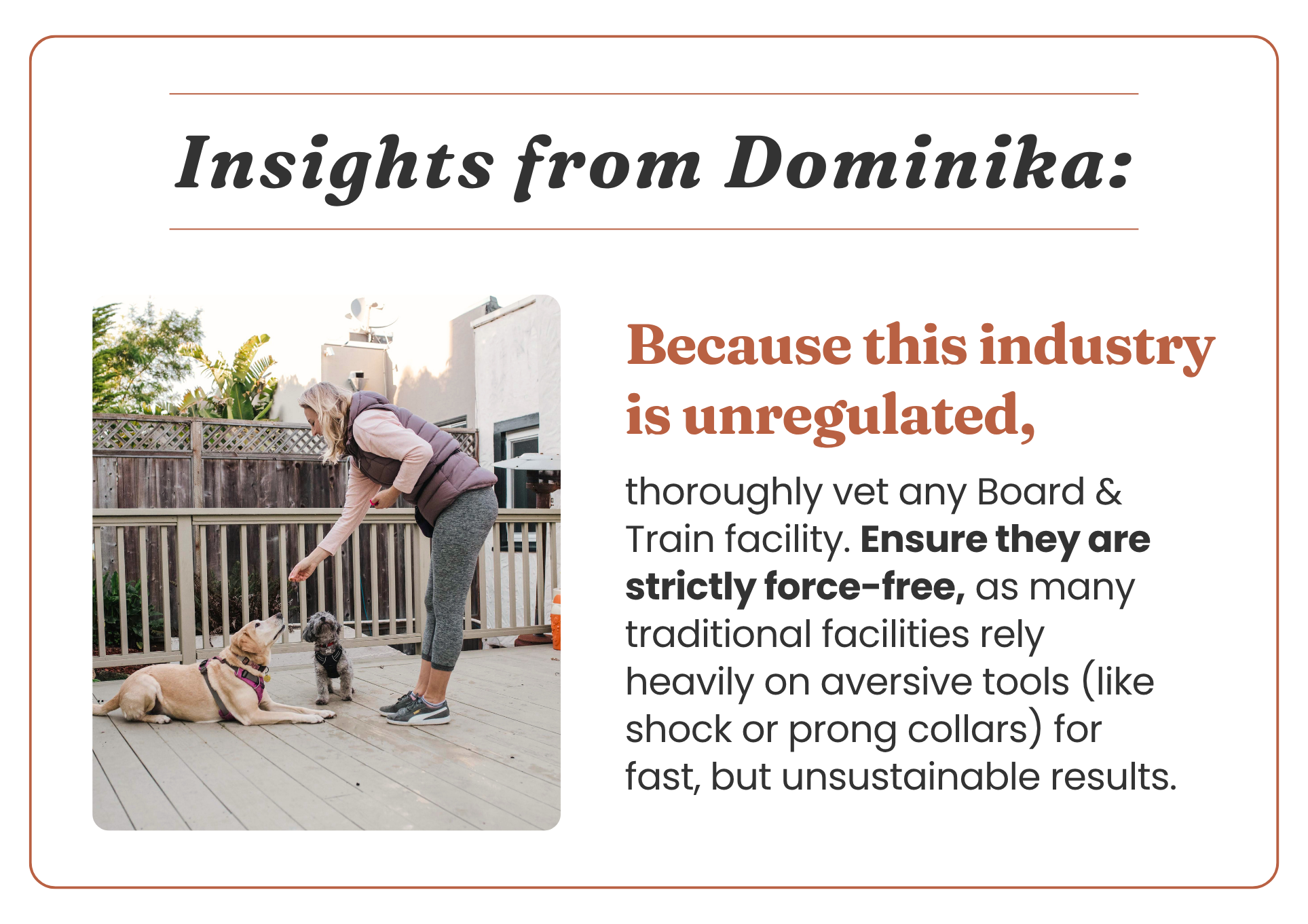
To make your search easier, you’ll also find a complete glossary of reputable domestic and international certifications at the bottom of this article. Sadly, the dog training industry is unregulated in most countries, meaning literally anyone can call themselves a trainer or behaviorist.
When dealing with complex family dynamics, fear, or territorial behaviors, checking a trainer's credentials ensures they have undergone rigorous testing, have field hours, and rely on modern, science-based methods.
In-person vs. Online Dog Training: Which is Better?
If you have a local dog trainer you love, great! But if you don’t, or prefer remote meetings, online training is a powerful alternative. Many behavioral challenges can be successfully observed, analyzed, and managed via live video feeds and recorded clips. Some trainers work exclusively online and offer a range of training packages and programs.
In fact, there are several scenarios where online sessions are actually much more beneficial than in-person training:
✔ Easily distracted pups SF Puppy Prep,a reputable dayschool for young puppies in San Francisco, CA, initially offered complimentary 60-minute in-home consultations. However, as much as the trainers loved meeting the puppies face-to-face, the playful, curious young pups often made it difficult for their owners to focus. Moving consultations online allowed parents to fully absorb the trainer's advice without constant, real-time distractions.
✔ Dogs with Separation Anxiety Separation anxiety training is conducted remotely because a trainer’s physical presence means the dog isn't truly alone, which alters their authentic behavior. Using live video allows the trainer to read subtle stress signals and carefully keep departures strictly below the dog’s distress threshold.
✔ Young Children and Dogs (myarea of expertise) Parents reach out when a dog shows discomfort around kids, displays stress signals, or has already snapped, growled, or bitten. In-person training with toddlers in the room is notoriously chaotic, not to mention the ever-changing nap schedule. Virtual sessions allow us to safely analyze recorded videos of real dog-child interactions to build a customized plan.
Newborns feed on demand, making virtual sessions far more forgiving. You can easily mute your mic or turn off your camera to nurse or soothe your baby. Plus, during those vulnerable early weeks when you are limiting visitors, remote coaching respects your space and avoids bringing a new stranger into the house while your dog is already adjusting to big household changes.
Note: General obedience training works wonderfully in person pre-baby when the focus is solely on the dog, but even those foundational skills can be successfully mastered online.
Virtual Dog Training & Consultation Services at Dog Meets Baby
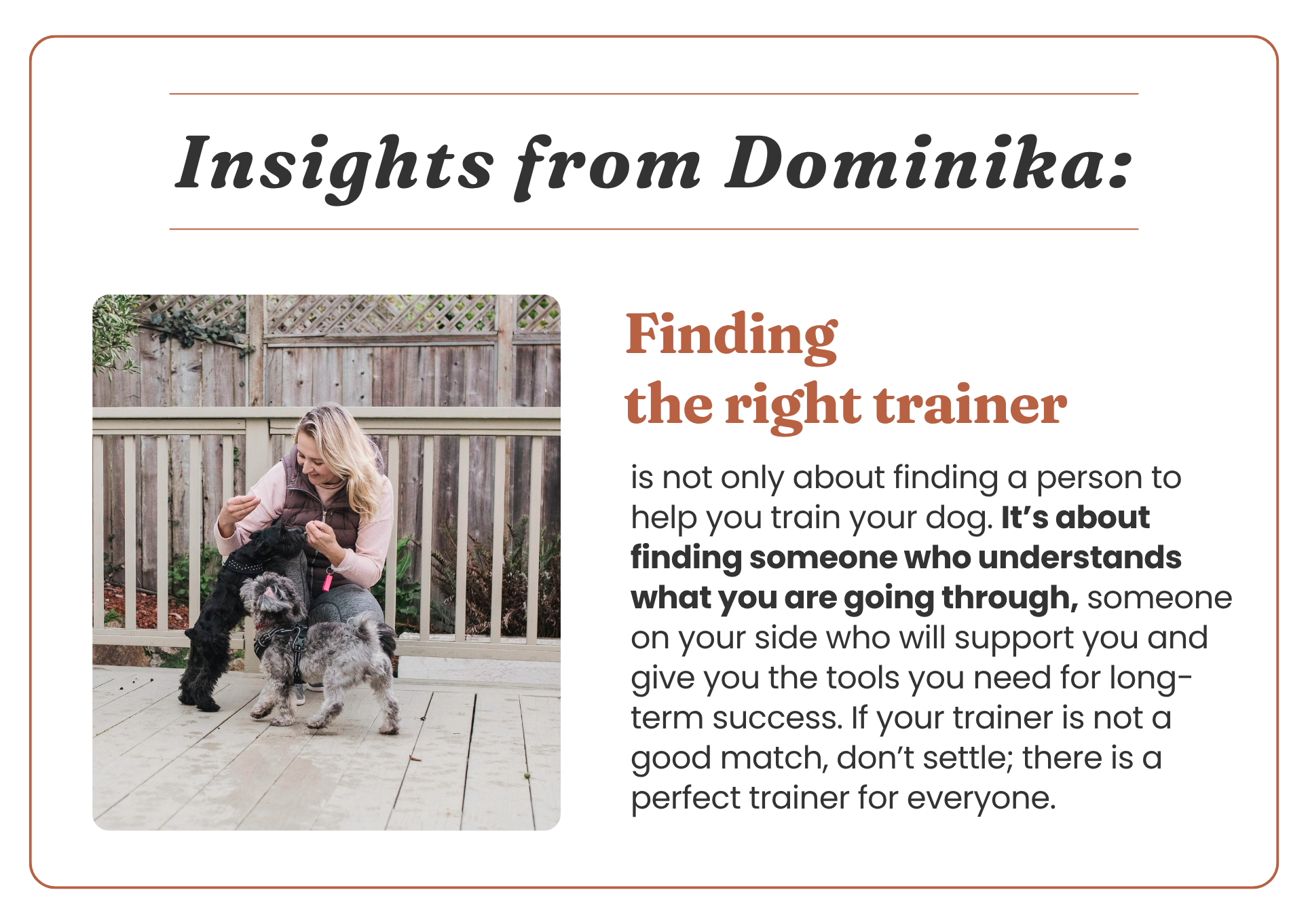
Every family’s dynamic is unique, which is why we offer tailored virtual support no matter where you are in your parenting journey. Here is how you can work with Dominika and Dog Meets Baby Trainers directly:
A deep-dive session analyzing your dog’s complete history, temperament, training, and home setup to create a customized management and training plan.
This is ideal for families navigating more complex situations that need direct, face-to-face guidance with Dominika.
We frequently support expecting parents, families with newborns struggling to adjust, and—most commonly—families with mobile infants and toddlers where the family dog shows signs of discomfort or has already snapped, growled, or bitten a child.
We recommend scheduling consults after bedtime or when your child is with a caregiver so you can focus 100%, but as a mom, I know that’s not always possible. Detailed follow-up notes are always provided, along with access to our private parent support group.
I know reaching out for a private consultation can feel like a big step. You may be wondering whether your situation is “serious enough,” whether a consultation will actually help, or what it will be like to talk through everything with someone. Here’s what some of the families I’ve worked with have to say about their experience.
Where to Find a Dog Trainer Near You
Word of Mouth: Ask your friends, neighbors, or family members for their recommendations, especially if you have met their dog and like the progress the dog has made with the trainer .
Recommendations from your local shelter, humane society, rescue group, veterinarian, vet tech, groomer, or local pet store. "Our vet clinic had an in-house trainer, and people in the waiting area would always talk about how great he was." — Dog Meets Baby Follower
Training Facilities: If you have had a great experience taking a group class at a local training center, ask the trainer if they offer private 1:1 sessions or if they could recommend a good trainer
Google, Yelp, or Nextdoor (USA): These local search platforms can be hit-or-miss. Some people find the most amazing trainers this way, while others end up with poor matches. Check their credentials if you go this route, not just the reviews.
Instagram, TikTok, Facebook: Social media is a great way to learn about that trainer’s style, approach, and expertise.
Business cards at pet stores, groomers, or veterinary offices.
How to Choose a Dog Trainer: What to Look For Before You Book
Different dogs and distinct behavioral issues require different training methodologies. Here are our top tips for finding the best fit for your dog:
Look for specialists: If your dog is dealing with intense behavioral issues, skip the general hobbyist and find someone who specializes in that specific problem.
Evaluate the facility's roster: Look for local training centers that offer advanced classes (like agility, reactive rover, nose work, canine good citizen, or competitive obedience) alongside basic puppy classes. This often indicates a more deeply educated, experienced training staff.
Prioritize post-session support: If ongoing support and accountability are important to you, look for trainers who bundle their sessions into packages that include email and text support, or offer a membership.
Be prepared for a wait: Experienced, highly educated trainers are often booked out weeks in advance and come at a premium price point. If your budget and timeline allow, they are usuallyy worth the wait.
"The trainer we found had tons of experience working with aggressive dogs. She was able to shed light on exactly why our dog reacted so quickly, and helped us build a realistic management plan to avoid future triggers." — Elizabeth, Dog Owner
"I had a great experience finding certified trainers through the SFSPCA before we moved across the country. Since then, I always audit a trainer's website looking for specific keywords to understand their core philosophy. Because we have a fearful dog, I strictly avoid anyone who mentions correction-based methods, prong collars, or choke chains. I look for 'force-free,' 'reward-based,' and 'positive reinforcement' as my non-negotiable keywords." — Casey, Dog Meets Baby Client
Types of Dog Training: Which One Does Your Dog Need?
Behavioral Consultations: Focused on diagnosing the underlying cause of problem behaviors and designing customized behavior modification plans.
Private Training & Coaching Sessions: Best for general manners and obedience training or the execution of the behavior modification plans. The trainer works directly with you and your dog privately in your home or out in the real world where the problem behavior actually happens (dog parks, parking lots, playgrounds, etc.). Typically, an hour-long training session, single sessions, or multiple, depending on the goal and training plan.
Behavioral Consultations and Private Training & Coaching can be done in person and online.
Boarding & Training: The dog stays at the trainer's house or facility for 14-21 days (could be longer). After B&T, the dog’s new skills are transitioned into their home through hand-over sessions where the owner learns the cues and how to use them effectively.
Day Training/In-home Private Training: The dog remains in your home while the trainer comes to train your dog. A package includes follow-up sessions with the family to ensure long-term success.
Signs Your Dog Trainer Isn't the Right Fit
The trainer doesn’t have the qualifications to address the behaviors. “The person was knowledgeable on the basics but didn’t have experience with nervous dogs who growl when strangers approach.”- Kathryn, Dog owner of a reactive rescue
Training methodology, personality, and lack of support. “The vet behaviorist was shaming us for not doing enough training. When we felt like we were doing the best we could. We stopped seeing her because we felt incredibly judged.” - John, Dog Meets Baby follower
(Note from Dominika: Hearing this makes me really upset.)
If you feel judged, misunderstood, or aren’t seeing any progress despite following the plan to a T, it is completely okay to walk away.
A Dog Trainer Is Not a Magician
Training takes time, especially when addressing behavioral issues. Owner compliance and commitment are essential factors, and the lack of either is frequently why training doesn’t work. A good trainer should help you understand what can be achieved with training and management and what might not be possible.
Dog Trainer Credentials: What the Letters Mean
When evaluating a trainer's website or bio, look for these specific, accredited credentials. Most of these organizations feature a searchable professional directory on their websites.
Dominika’s credentials:
I’m a CTC. I graduated in 2008 from The Academy for Dog Trainers, often referred to as the "Harvard of dog training." I also did the Family Paws Educator Foundation Course in 2019.
Core Dog Trainer Certifications
CTC: Certificate in Training and Counseling (The Academy for Dog Trainers)
KPA CTP: Karen Pryor Academy Certified Training Partner
Specialist Certifications: Separation Anxiety, Reactivity & Family Dogs
CSAT: Certified Separation Anxiety Trainer (The Separation Anxiety Certification Program by Malena DeMartini)
CSAP-BC: Certified SA Pro Behaviour Consultant (Julie Naismith Program)
FPPE: Family Paws Parent Educator (Specializing in dog and child dynamics)
CBATI-KA / CBATI-KSA:Certified Behavior Adjustment Training Instructor, Knowledge Assessed / Knowledge and Skills Assessed(Specializing in reactivity, fear, and aggression)
When to See a Veterinary Behaviorist
If your dog's behavioral issues stem from severe physiological anxiety, fear, or aggression, you may need a medical approach combined with training.
DACVB (Veterinary Behaviorist): A Board-Certified Diplomate of the American College of Veterinary Behaviorists. These are fully licensed veterinarians who have completed years of rigorous, advanced post-graduate residency work specializing in animal behavior. They are uniquely qualified to evaluate the interplay between your dog's physical health and mental health, and they are licensed to prescribe behavioral medications when indicated. Find a veterinary behaviorist here.
VTS (Behavior): A Veterinary Technician Specialist in Behavior. These are highly credentialed veterinary nurses who have undergone advanced, rigorous testing and training in behavioral modification, overseen by the Academy of Veterinary Behavior Technicians (AVBT).
Professional Memberships Worth Looking For
While memberships are not the same as rigorous certifications, active participation in these organizations shows a commitment to continuing education and modern, humane methodologies:
IAABC (International Association of Animal Behavior Consultants)
CCPDT (Certification Council for Professional Dog Trainers)
AVSAB (American Veterinary Society of Animal Behavior)
Fear Free Pets - Created by veterinary professionals, this has become a massive standard for force-free training and handling of companion animals to reduce Fear, Anxiety, and Stress (FAS).
Cat Behavior Credentials: What to Look For
Just like the dog training world, cat behavior consulting is unregulated. If you are looking for help with feline aggression, litterbox issues, or introducing a cat and a new baby, look for professionals certified by the organizations below.
CCBC: Certified Cat Behavior Consultant (International Association of Animal Behavior Consultants) — the credential to look for in advanced cases like aggression, spraying, or severe anxiety
PFT-A / PFBC-A: Professional Feline Trainer / Professional Feline Behavior Consultant, Accredited (The Pet Professional Guild) — the feline equivalents of the canine PCT-A and PCBC-A
CFTBS: Certified Feline Training and Behavior Specialist (Animal Behavior Institute)
CFV / CFVP: Cat Friendly Veterinarian / Cat Friendly Veterinary Professional (Feline Veterinary Medical Association, formerly the AAFP) — held by individual vets and veterinary nurses. Note that Cat Friendly Practice (CFP) is awarded to a clinic, not to a person.