
About

Products
Freebies

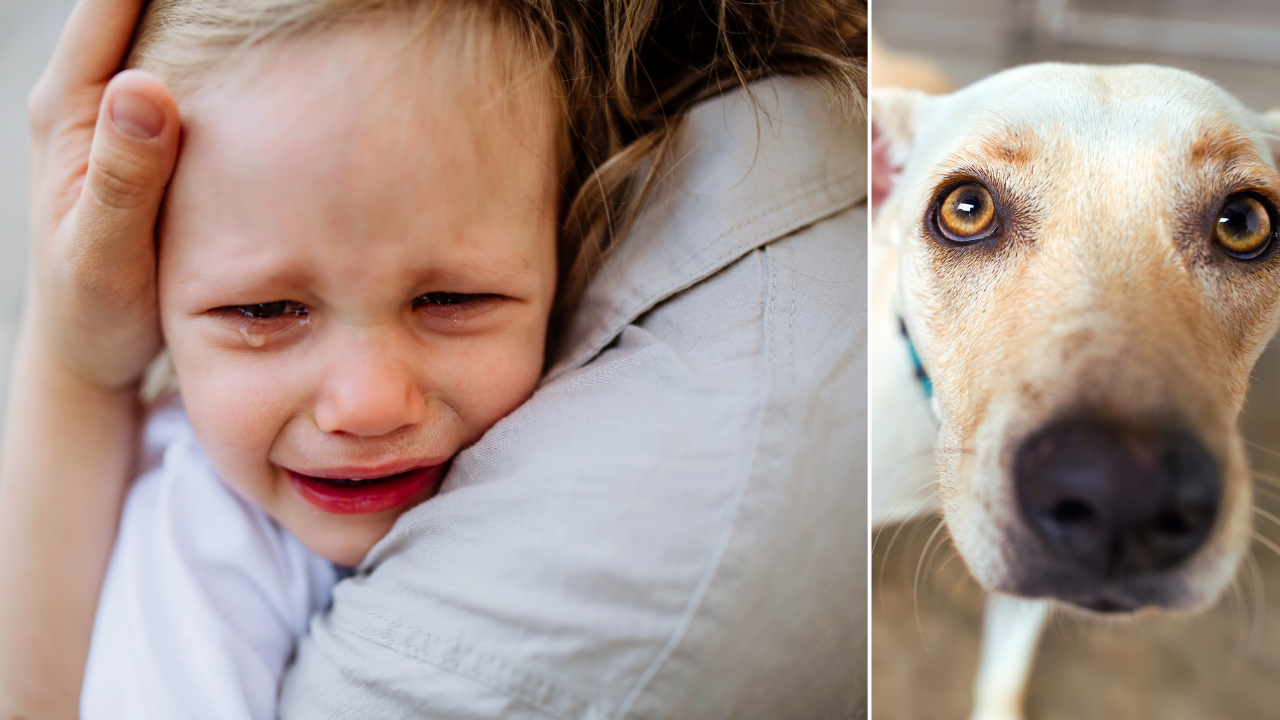
Knowing what to do if a dog bites your child can make a stressful situation more manageable.
This guide covers the first few minutes after a bite, how to make a decision about whether to go to the ER, practical ways to support your child and yourself emotionally, and what to do with your dog once you are home.
This blog was written by:
Disclaimer
This information is for educational purposes only and should not be considered personal medical, counseling, or training advice. Use of this guide and linked materials is at the user's own risk and is not a substitute for professional diagnosis or treatment. Users should not ignore or delay seeking medical advice for health or mental health issues and should consult their healthcare professionals. This information does not replace the judgment of a provider directly assessing your child or dog.
A Quick Note on Scope & Reporting
Dominika has written separately about why punishing a dog backfires, in the To punish or not to punish blog.
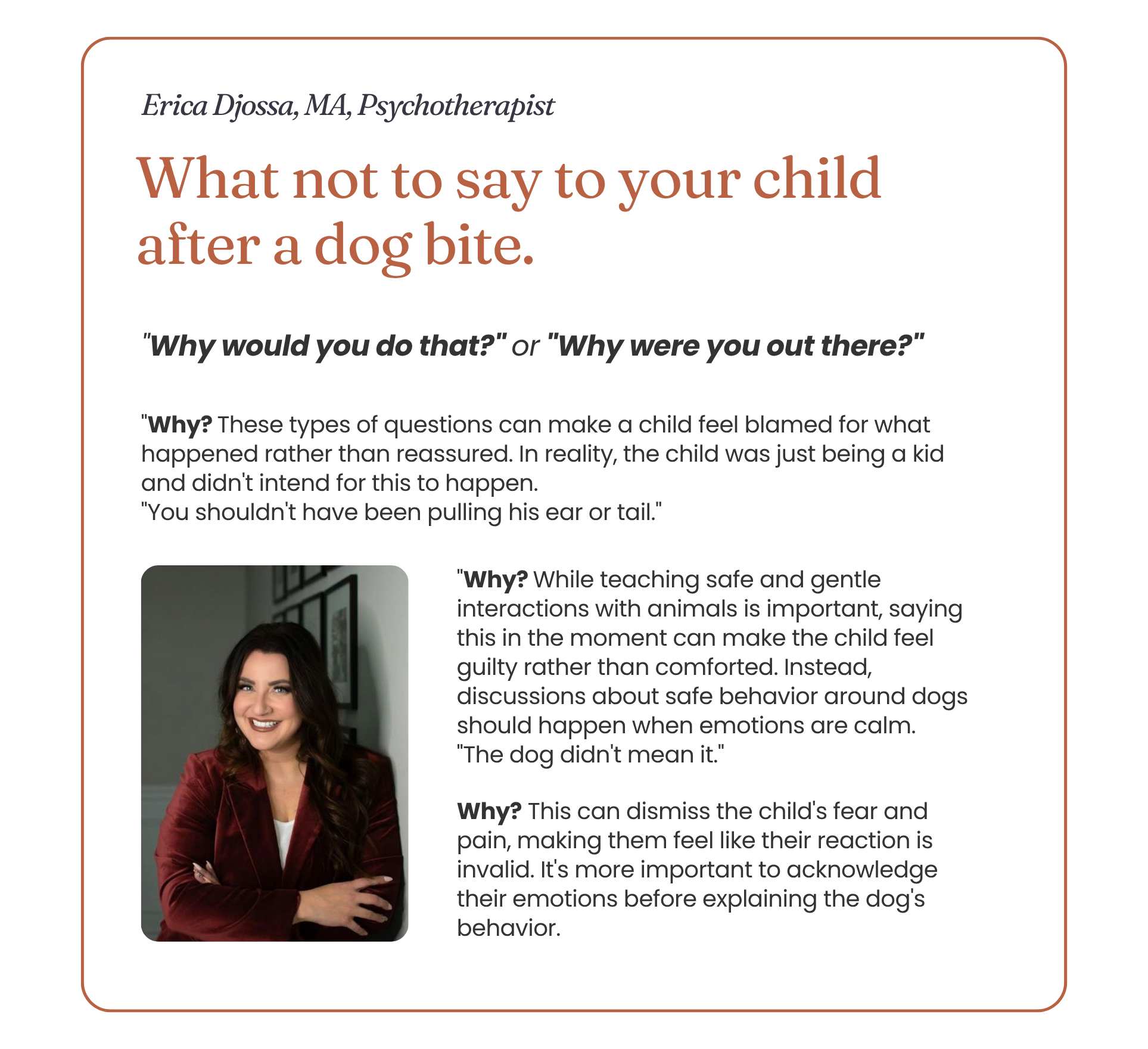
Erica Djossa, MA, Psychotherapist
"This is an emergency. I need to check the bite. I know you are scared, but I am here now, and you are safe. We're going to get the help you need."
Why? Clearly labeling the situation as an emergency helps the child understand the urgency without panic and lets the child know that they don't have to do anything except be cared for. Reassuring them that you are there and in control provides comfort and a sense of security.
"I want you to know this wasn't your fault. You didn't do anything wrong, and you didn't deserve that."
Why? Children may blame themselves or think they caused the bite. Reassuring them that it wasn't their fault helps prevent feelings of guilt and shame.
"It makes sense that you are upset. I would be upset, too. However you feel is okay, and I'm here to help you through it."
Why? Children can experience a range of emotions after a traumatic event. Validating those feelings — rather than trying to immediately "fix" them — helps them process the experience in a healthy way.
Dr. Darria Long, ER Doctor
If the skin isn't broken and it's just a scrape, wash it with soap and water really, really well.
If the skin is broken, either via puncture or actual tearing, you should see a doctor.
You don't have to RUN, but you should go that day. Waiting over 12 hours after a bite — especially on the extremities — increases the risk of infection. We will want to clean it well, and the longer you wait, the more it may hurt and raise the risk of infection.
Do dog bites get infected easily?
Yes, not as easily as cat bites, but dog bites have a moderate risk of infection.
Erica Djossa, MA, Psychotherapist
Even though you may be nervous, scared, or anxious inside, staying as regulated as possible will serve both you and your child. Keep your explanations simple and reassuring.
Kids don't need every detail; they just need to know what's happening in a way that feels manageable for them.
What to say: "The doctor is just going to check and clean your wound to help it heal. You can ask me or the doctor any questions you have."
Why? This gives them a clear but gentle understanding of what to expect. Giving them permission to ask questions empowers them in an unfamiliar situation.
What to say: "Some parts might feel a little uncomfortable, but I'll be with you the whole time. It's okay to feel nervous or even a little scared."
Why? This prepares them for any discomfort while reinforcing that they are not alone. When kids know what to expect, they feel more in control. It also reassures them that their emotions are valid.
What to say: "Would you like to bring your stuffed animal, blanket, or favorite toy with you?"
Why? Familiar objects provide comfort and security in stressful situations. Having something that feels safe can help them stay calm.
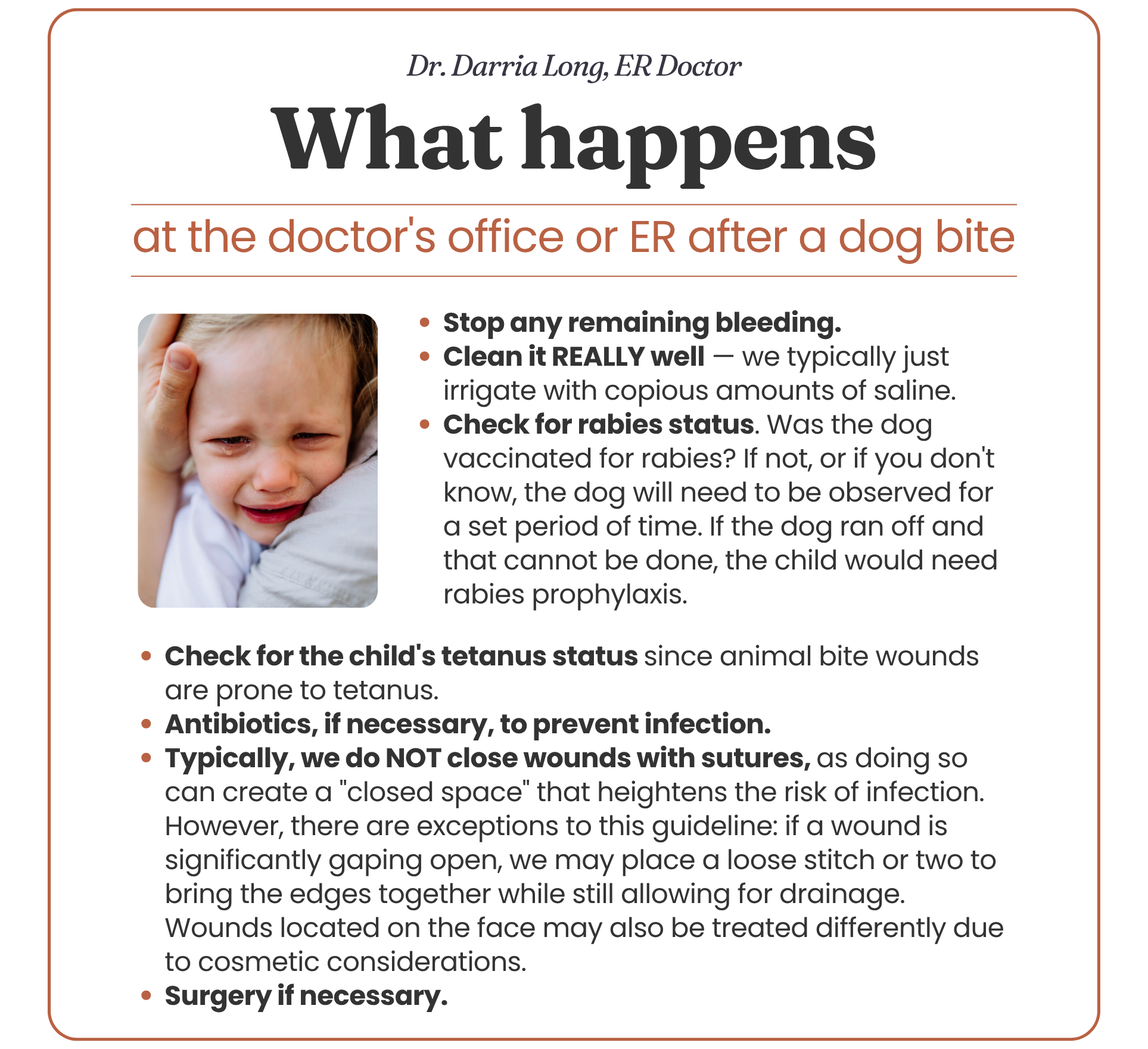
Dr. Darria Long, ER Doctor
If you've had a dog bite, it's important to monitor for signs of infection even after visiting the doctor.
Look out for symptoms such as redness, increasing pain, warmth, or any red streaks extending toward the center of the body.
Dominika Knossalla-Pado, Certified Dog Trainer
Keep the dog separated from all children. Their cortisol levels (stress hormone) can stay elevated for a few hours to a few days. The risk of another bite increases after the dog has bitten once. Understanding the cause can help prevent future incidents.
No. Bite incidents are complex, and context matters. Professionals use tools like Ian Dunbar’s 6-Level Bite Scale to measure severity, but a higher number doesn't tell the whole story. A certified trainer or veterinary behaviorist looks at the full picture before making any recommendations.
Resources: Dog Meets Baby Baby and Toddler Courses · Baby Gate Guide · Shop Crates · Shop Gates
Very young children may not understand why the dog is separated from them and be upset about it, especially if they used to spend a lot of time together.
They may act as if nothing happened and still try to approach the dog to pet them. This is why the baby-only and dog-only zones matter so much in the weeks after a bite.
Create baby-only and dog-only zones:
Once everyone is safe and the acute stage has passed, the long-term work is teaching your child what your dog was trying to say before the bite.
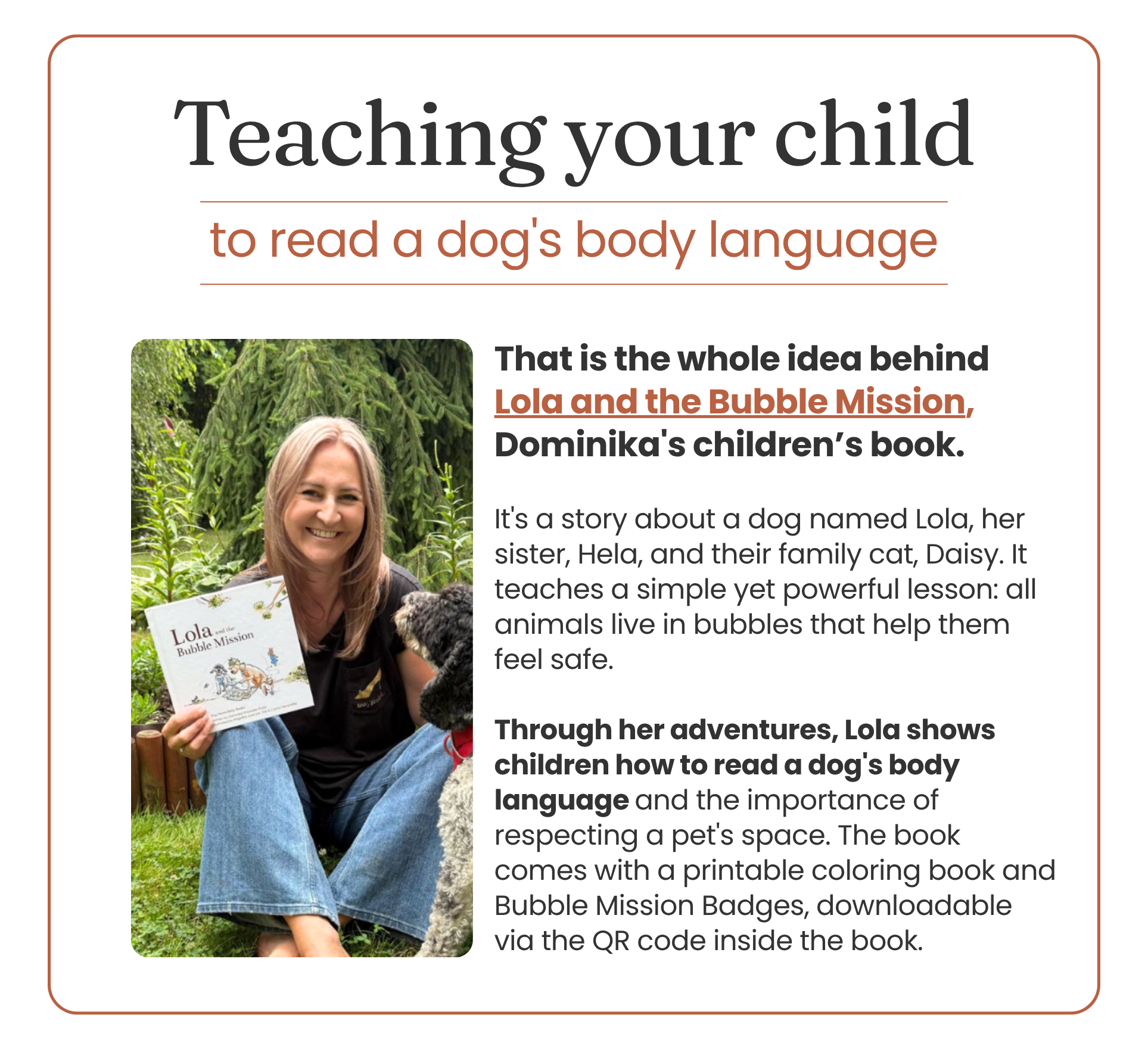
For the adult version of the same skill, the Dog Body Language Course covers what your dog is telling you, and this blog post on understanding dog body language around your baby is a good place to start for free.
Dominika Knossalla-Pado, Certified Dog Trainer
Yes, in the USA, dog bites typically need to be reported by the hospital, especially if the skin was broken.
However, reporting requirements can vary by state and local jurisdiction. Some require that all bites be reported, while others may only require reporting in certain circumstances.
The hospital will report the bite to the local Animal Care and Control or the Department of Health. If the bite is reported, the dog is placed on a 10-day quarantine to watch for signs of rabies. Usually, dogs are allowed to be quarantined at their home.
Insurance claims: Notifying local authorities is often a mandatory step if you plan to submit medical expenses to health or homeowner's insurance.
Documentation: Filing a formal report creates an official paper trail, which is vital for protecting yourself legally, whether your dog bit another child or an unfamiliar dog bit yours.
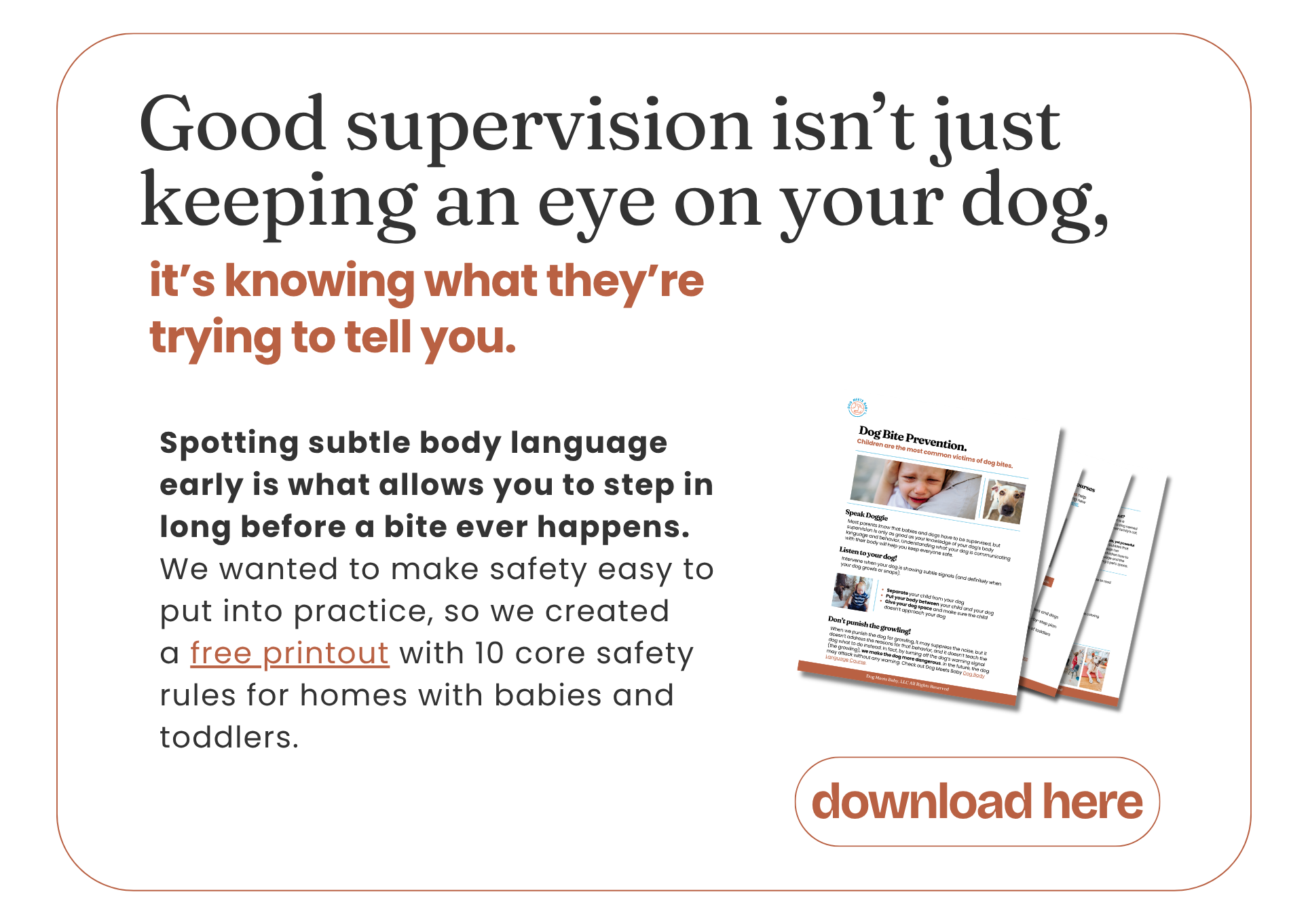
Separate the dog from the child and move the dog to a space where it can calm down, away from everyone, including other pets. Then wash your child's wound with soap and lots of water. Stay as calm as you can, and don't punish the dog.
If the skin isn't broken and it's just a scrape, wash it with soap and water really well, give pain medication as needed, and watch for signs of injury or infection. If the skin is broken, either via puncture or actual tearing, you should see a doctor. You don't have to run, but you should go that day.
Don't wait if the skin is broken. Waiting over 12 hours after a bite, especially on the extremities, increases the risk of infection.
Yes. Acetaminophen, also known as paracetamol, and ibuprofen are both good options.
Dog bites don't get infected as easily as cat bites, but they carry a moderate risk of infection. Watch for redness, increasing pain, warmth, or red streaks extending toward the center of the body.
Typically, dog bite wounds are not closed with sutures, because doing so can create a closed space that heightens the risk of infection. There are exceptions: if a wound is significantly gaping open, a doctor may place a loose stitch or two to bring the edges together while still allowing for drainage. Wounds on the face may also be treated differently due to cosmetic considerations.
There are 6 canine bite levels on the Ian Dunbar’s scale. Generally, the higher the level, the poorer the prognosis, but bites are not equal. The reasons for rehoming a dog are complex. Besides the dog's behavior, other factors play a significant role, such as:
Dog professionals take into consideration many variables, that’s why it is important to consult a certified dog trainer or a veterinary behaviorist after a bite.
In the USA, dog bites typically need to be reported by the hospital, especially if skin was broken, though requirements vary by state and local jurisdiction. The hospital reports the bite to the local Animal Care and Control or Department of Health, and the dog is usually placed on a 10-day quarantine at home to watch for signs of rabies.
Very young children may act as if nothing happened and still try to approach the dog. They may also be upset that the dog is separated from them, especially if they used to spend a lot of time together. Toddlers often can't recognize when a dog might be uncomfortable. In fact, a 2016 study in the Journal of Veterinary Behavior found that many young children interpret a growl as a smile.
Dominika offers courses for expecting or new parents, courses for parents with soon-to-be mobile babies and toddlers, and a Dog Body Language Course for dog parents with and without children. She also offers private consultations, including specialized After a Bite Consultations.
No Panic Parenting - Courses for Baby Proofing and CPR, Choking, and Emergencies
Use coupon code- DOGMEETSBABY to get 30% off both courses
Begin your journey with Momwell today → momwell.com/get-started
Erica Djossa:
Erica Djossa, MA, Psychotherapist
When something frightening happens to your child, it's natural to feel overwhelmed, guilty, or anxious. You may replay the situation in your mind, wondering what you could have done differently.
But in this moment, your child doesn't need a perfect parent—they need a present one.
What to do:
Take a deep breath and try to stick with the facts rather than allowing worries or "what ifs" to take over.
Speak to yourself with compassion. Remind yourself that this is also scary for you, but you trust in your ability to navigate the situation.
Be kind to yourself—don't beat yourself up.
Erica Djossa, MA, Psychotherapist
When something scary happens, it's human nature to search for an explanation—or someone to blame. You may feel the weight of judgment from family members. Shifting away from blame and more toward support is the best way to move forward. Blame keeps us stuck, while solutions help us heal.
What to do:
Redirect the conversation: "I know we're all feeling a lot right now. Let's focus on how we can move forward and keep everyone safe."
Set boundaries if needed: "I really need support right now, not blame."
Text a friend or family member for support—but be selective.
Online resources to help your baby and dog get along—right from the start and as they grow up together.


