About

Products
Freebies

Traveling with a dog and baby? Find out which crash-tested harnesses, kennels, and carriers actually keep your family safe - expert-backed picks at every price point.

Dog Meets Baby (Blog) is reader-supported. When you buy through links on this page, we may earn an affiliate commission at no additional cost to you.
If you're reading this, you're probably wondering the same thing I did: Is my dog safe in the car with my baby? Maybe you've been driving with your dog loose in the back seat for years without a second thought. But now there's a car seat, a tiny human, and suddenly that setup feels... risky. You're not imagining it.

Whether you're expecting, have a newborn, or are finally ready to upgrade from the loose-dog setup, this guide will help you choose the right product for your family.
Quick summary: Secure your dog in a crash-tested harness, kennel, or carrier, and keep your dog and baby in separate rows when you can. If they share a row, seat your dog as far from the car seat as possible.
Before I had my kids, I knew nothing about projectiles or babies and dogs in the car. Lola used to ride in the back seat, loose. I know!
In a 2011 AAA/Kurgo survey, only 17% of dog owners said they use any kind of restraint when their dog rides in the car. If you're reading this, you're already ahead of most.
Unrestrained dogs can:
Ideally, your dog is:
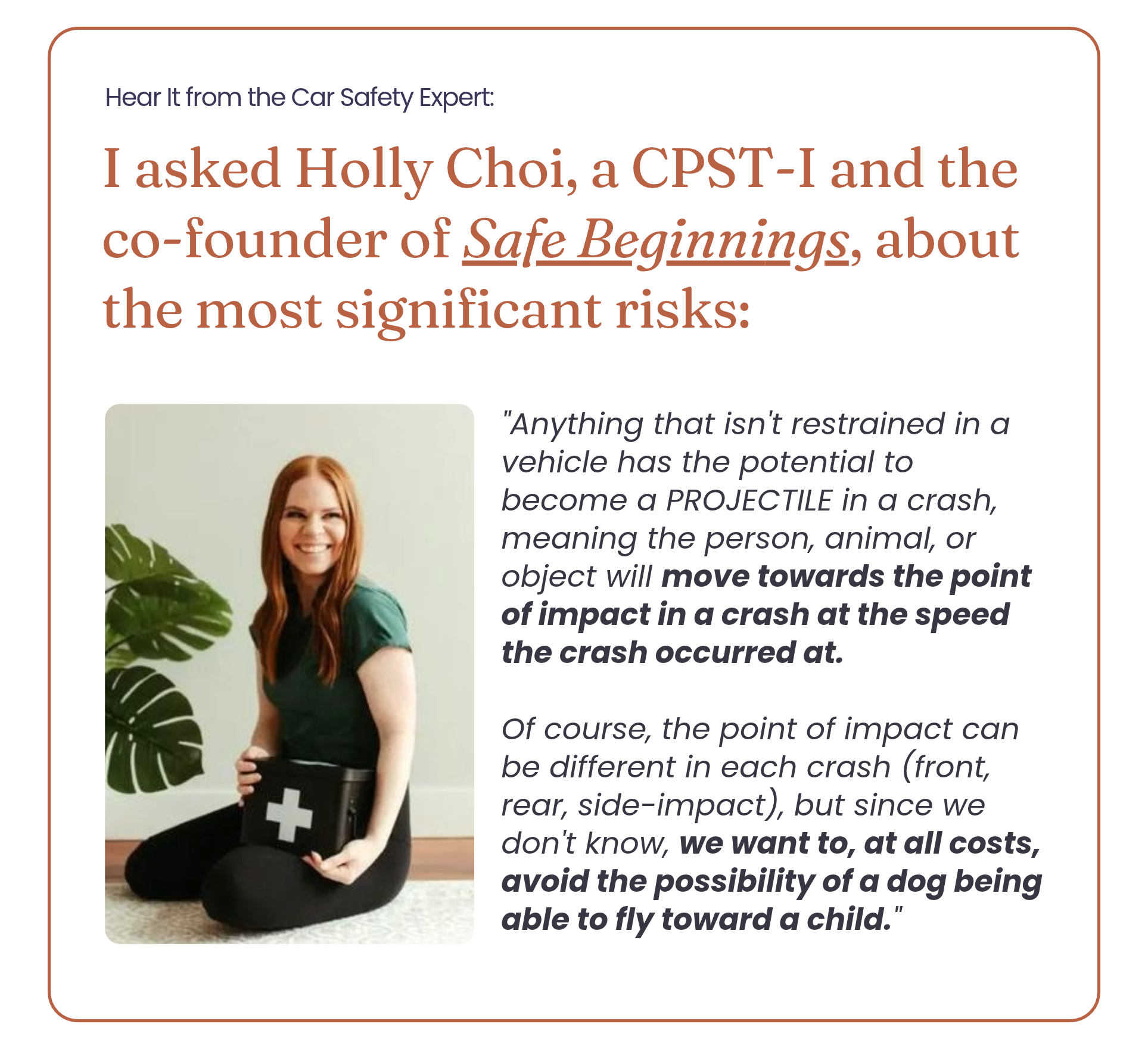
Yes, if your dog is secured in a crash-tested harness, kennel, or carrier, and sits as far from the car seat as possible, so they can't reach the baby (and the baby can't reach them). Even a restrained dog moves forward and sideways in a crash, so when possible, separate rows add extra distance between them.
Some families place the dog in the front passenger seat with the airbag disabled, while an adult rides in the back with the baby. This isn’t recommended: passenger airbags are built for adult bodies, and AAA warns they can be highly dangerous to a pet in a crash, even a restrained one.
If you’re considering the front seat, check your car’s manual to see whether you can switch the passenger airbag off, or whether the car decides automatically using sensors. Most cars sold in the US decide automatically, and NHTSA only authorizes on/off switches for specific cases, like a rear-facing car seat in a car with no back seat. Those sensors are designed to detect people, so a large dog may be read as an adult and leave the airbag on. As GM’s manual puts it, “no system is fail-safe.” Check the passenger airbag light before every trip if your car has one.
Unless you have the RIGHT CAR to fit everyone safely, it is a "weigh your risk situation."
There is a lot we can't control. We can control how everyone rides in the car. Sometimes that might mean:
Where everyone sits depends on how many kids and dogs you have and what car you drive. Our seating guide has diagrams for the most common family setups.
After years of driving a small SUV, we upgraded to a minivan when the kids turned five. Lola had her own dedicated seat with the Sleepypod Clickit Sport Plus Harness, and there was plenty of room for a crash-tested kennel if we ever wanted one. I dreaded parking that big van in San Francisco, but I loved the peace of mind that came with knowing everyone was safely buckled in.
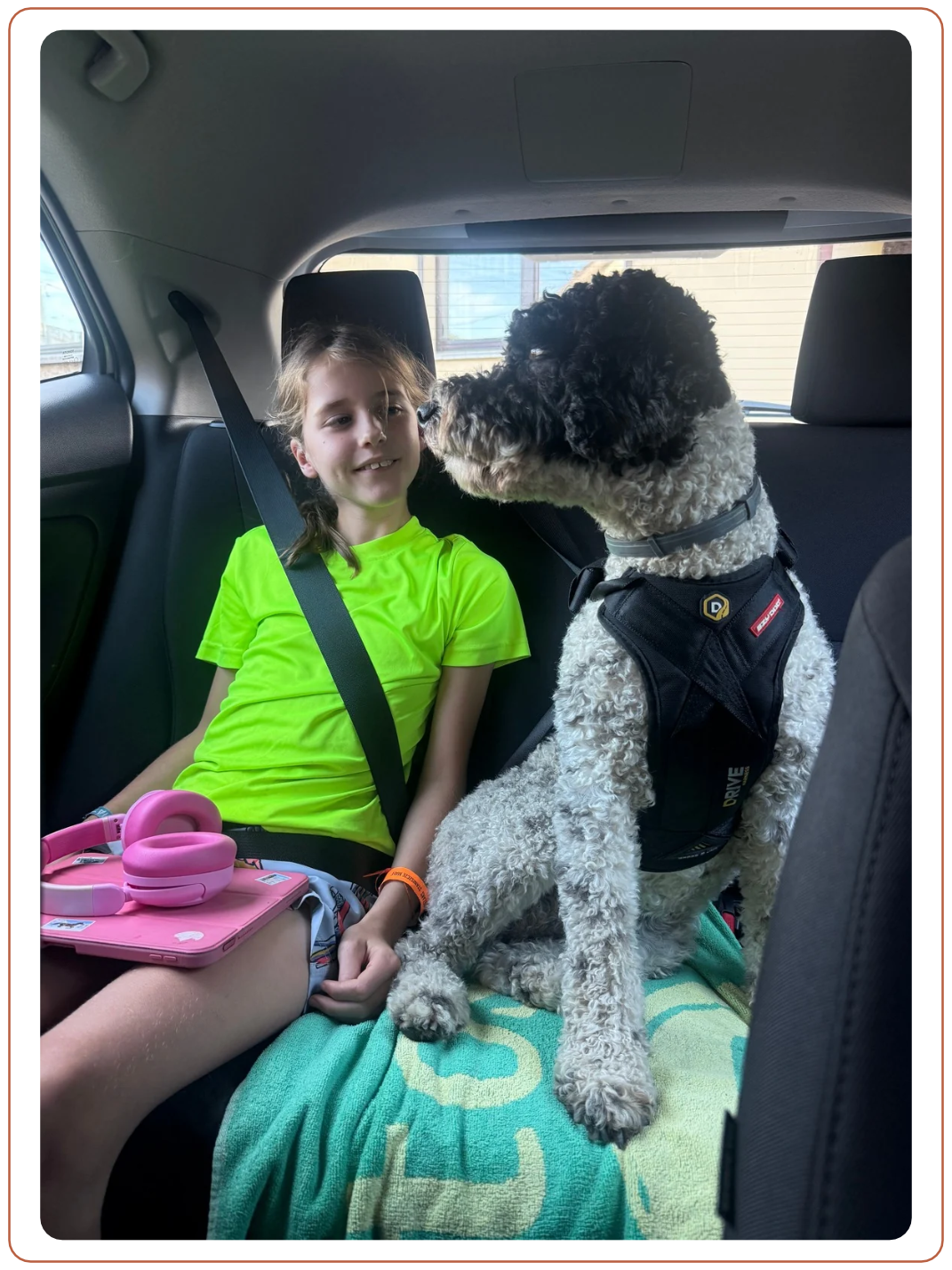
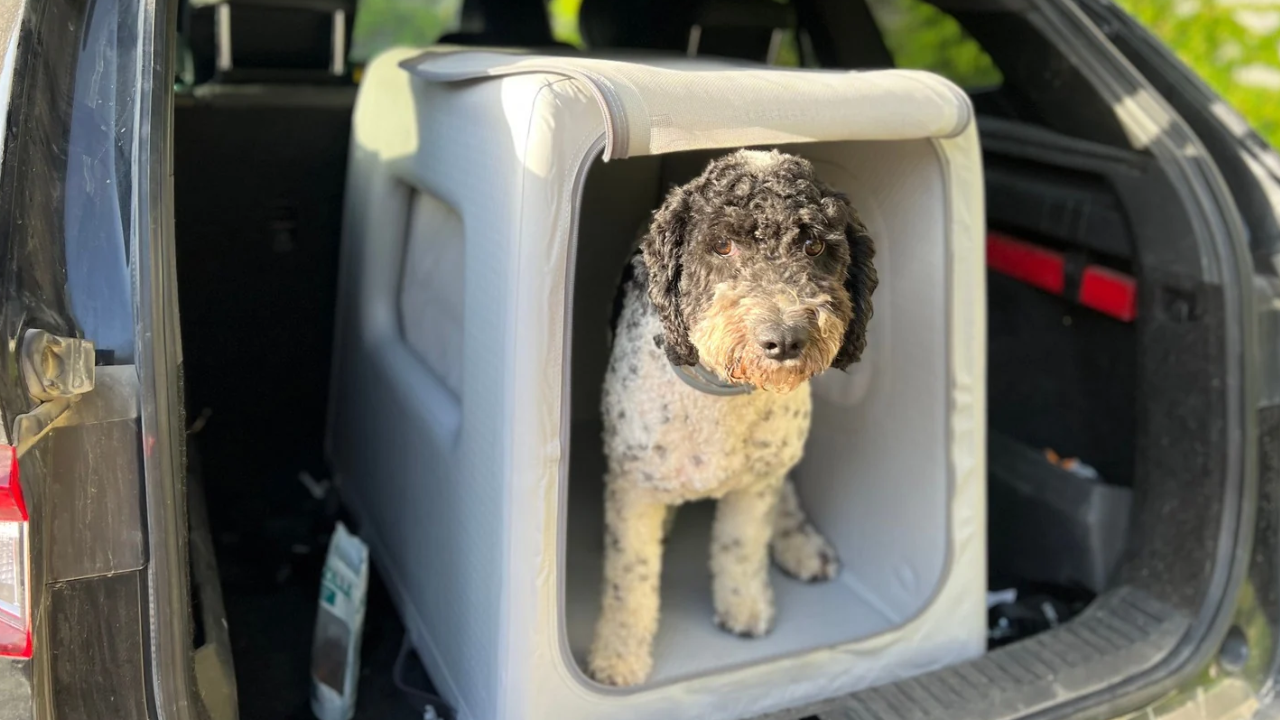
When we moved, we transitioned back to a mid-size SUV. This time, we got a Diggs Enventur Inflatable Travel Kennel (discontinued) for Hela and the EzyDog Drive Harness for Lola.
The kennel setup worked beautifully for about a year, but because we used it almost daily, the zipper eventually started to break. Around the same time, an EMT explained vehicle crumple zones to me. Once I understood how cars are designed to absorb impact, keeping Hela in an inflatable kennel in the cargo area (trunk) felt like a risk I wasn't willing to take anymore, so we switched her to the EzyDog harness too.
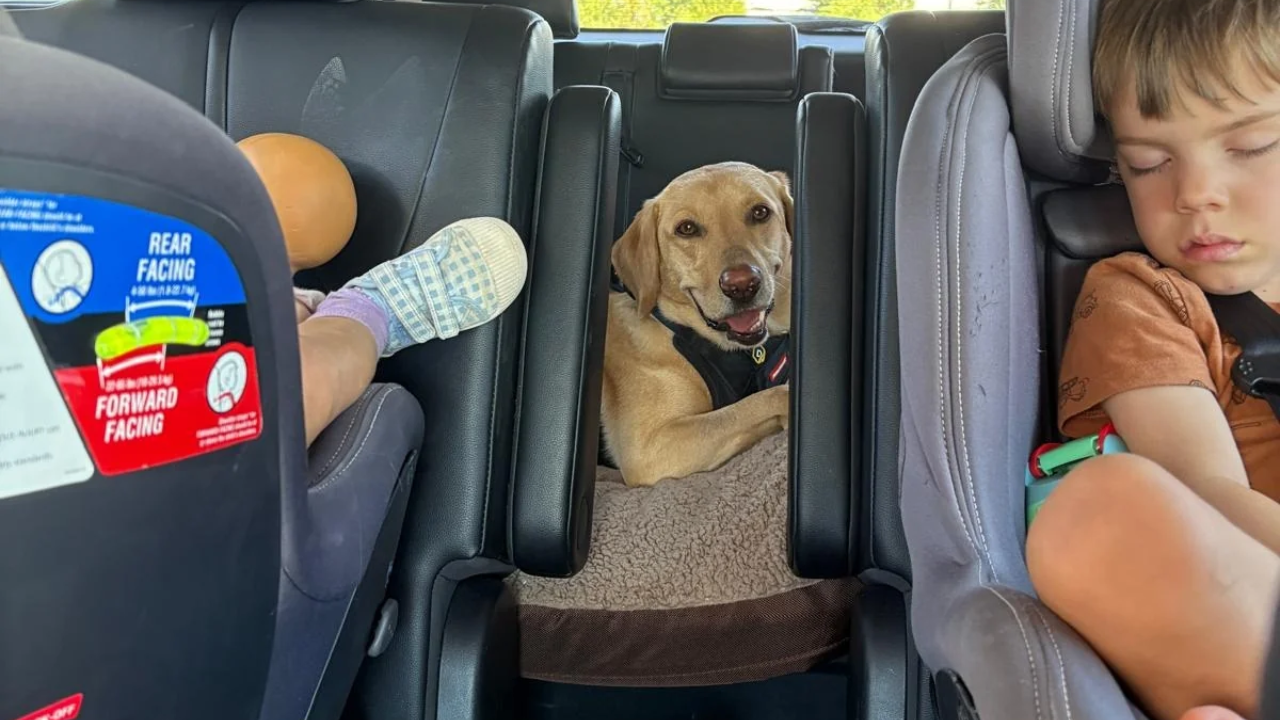
Our senior dog, Lola, was quite sick by then, so the dogs rarely rode together. When they did, one dog sat between the kids and the other in the front seat with the passenger airbag turned off. After Lola passed away, Hela moved permanently to the spot between the kids' BeSafe iZi Flex FIX 2 i-Size booster seats (they were 8 at the time).
Learn how crumple zones work and where to put a dog kennel in your car.
Not all "crash-tested" products are created equal. It's an unregulated industry, and many dog restraints, harnesses, and crates marketed as "crash-tested" have not passed rigorous independent crash tests.
In the U.S., the Center for Pet Safety (CPS) is the most widely recognized independent testing organization for pet travel products. CPS certification is commonly treated as the gold standard because:
Some manufacturers also test products at certified facilities using recognized child car seat or vehicle cargo standards. None of these were written for dogs, so passing one isn't the same as CPS certification:
What matters most is transparency: clear testing protocols, weight limits, and third-party verification.
Best for: Dogs who are comfortable in the car, medium to large breeds, and families who need flexibility in seating arrangements.
Thread the seat belt through the harness exactly as the maker instructs, and remove the slack. Never add an extension tether or zipline. CPS says these increase the risk of injury and cancel out a harness's crash protection.
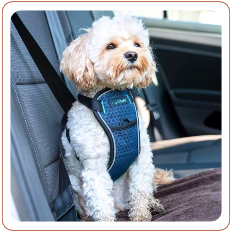
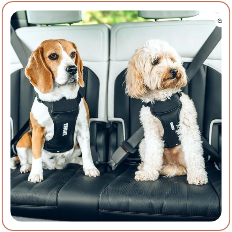
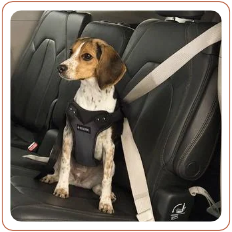
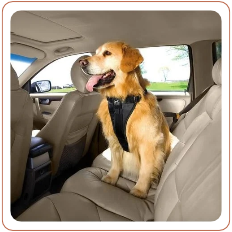
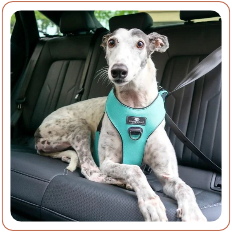
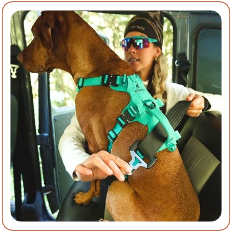

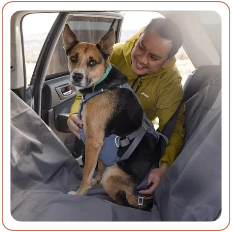
️See our picks: Best Crash-Tested Dog Car Harnesses
Best for: Dogs who need their own space, families with cargo area space, and dogs who are already crate-trained.
A crash-tested kennel with strength-rated anchor straps. In CPS's 2015 crate study, rubber straps failed to protect the crate, the dog, or the passengers. CPS also recommends asking your car's maker whether the cargo anchors are strength-rated.
See our picks: Best Crash-Tested Dog Crates for the Car
Best for: Small dogs, dogs who feel more secure in enclosed spaces, families with limited cargo space.
A CPS-certified carrier secured in the back seat. If your carrier isn't crash-tested, the floor behind the driver or passenger seat is the safer spot.
See our picks: Best Crash-Tested Dog Carriers and Car Seats for Small Dogs
Short answer: they won't keep your dog away from your baby in a crash.
Find out why, and what to use instead, in How to Separate Your Dog and Baby in the Car.

As one Dog Meets Baby follower put it: "Never thought we would need a 3-row vehicle for 2 adults, 1 baby, and a large dog."
I didn't either. When I had my dog loose in the back seat, I simply didn't know any better.
If your dog still rides loose, or in a harness or crate that hasn't been crash-tested, now you know your options. It's an adjustment, and sometimes an expensive one. But knowing you've done everything you can to keep your family safe is priceless.
Want more help with car seats, choosing a family car, or planning a longer trip? Start here:
What is the safest way to transport a dog in a car with a baby? Secure your dog in a crash-tested harness, crate, or carrier, and, when possible, keep your dog and baby in separate rows. If they share a row, seat your secured dog as far from the car seat as possible, so they can't reach each other.
How do you travel with a dog and a baby in the car? Keep them in separate rows when you can, and secure your dog in a crash-tested harness, kennel, or carrier every trip, not just on long drives. If your car only has one back row, secure your dog as far from the car seat as possible. For road trips, a bigger (rental) car can solve the space problem.
Can my dog ride in the front seat if my baby is in the back? It's not recommended. Some families still do it so the dog and baby aren’t in the same row, but passenger airbags are built for adult bodies, and AAA warns they can be highly dangerous to a pet in a crash. Instead, CPS recommends securing your dog in the back seat with a CPS-certified harness, crate, or carrier, or in a crash-tested kennel secured in the cargo area. Most cars sold in the US decide automatically whether the passenger airbag is on, using sensors designed to detect people, so a large dog may be read as an adult and leave the airbag on. If you do use the front seat, check your car’s manual and the passenger airbag light before every trip.
What does "CPS certified" mean? It means the product passed crash testing by the Center for Pet Safety, an independent nonprofit that publishes its test protocols and uses strict pass/fail criteria. Certification applies only to the specific sizes CPS lists. "Crash-tested" on its own can mean anything from rigorous third-party testing to a manufacturer's own claim.
Car safety is one piece of it. But the work that matters most - training your dog before the baby arrives, getting the first introduction right, knowing how to handle a toddler who doesn't understand boundaries yet - that's where everything changes. If you're ready to go deeper:




Disclaimer: This blog is for educational purposes only. Please contact your veterinarian, a certified dog trainer, or a veterinary behaviorist if your dog's well-being is at risk or your dog's behavior poses a threat to you or other people.
Author: Dominika Knossalla-Pado, Certified Dog Trainer & Founder of Dog Meets Baby
Online resources to help your baby and dog get along—right from the start and as they grow up together.