About

Products
Freebies

Dog Meets Baby (Blog) is reader-supported. When you buy through links on this page, we may earn an affiliate commission at no additional cost to you.
A crash-tested crate gives your dog their own safe space in the car and keeps them and your baby out of each other's reach. Here are the kennels we trust, how to secure them, and where in the car they're safest.
Quick summary: The safest dog crates for the car are certified by the Center for Pet Safety (CPS), like the Gunner G1, Lucky Duck Lucky Kennel, Cabela's Gun Dog Kennel, and Rock Creek Aluminum Kennel, used with strength-rated anchor straps. Only specific sizes are certified, and each kennel below lists which ones.
Not sure what "crash-tested" means? Here’s what to look for before you buy.
Best for: Dogs who need their own space, families with cargo area space, and dogs who are already crate-trained.
Use a crash-tested kennel with strength-rated anchor straps. In CPS's 2015 crate study, rubber straps failed to protect the crate, the dog, or the passengers. CPS also recommends asking your car's maker whether the cargo anchors are strength-rated.
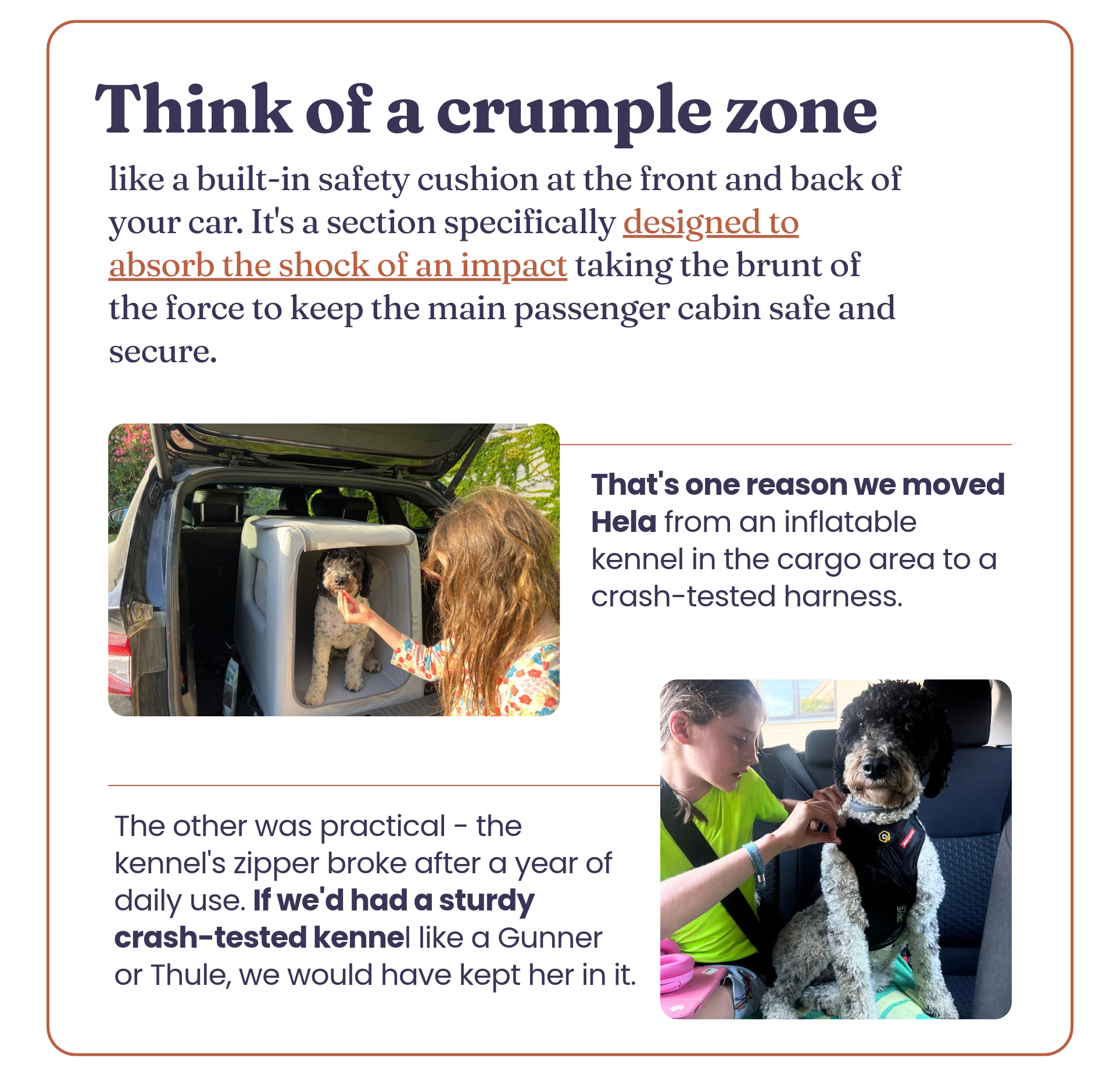
Read the full story in My Personal Journey to Car Safety.
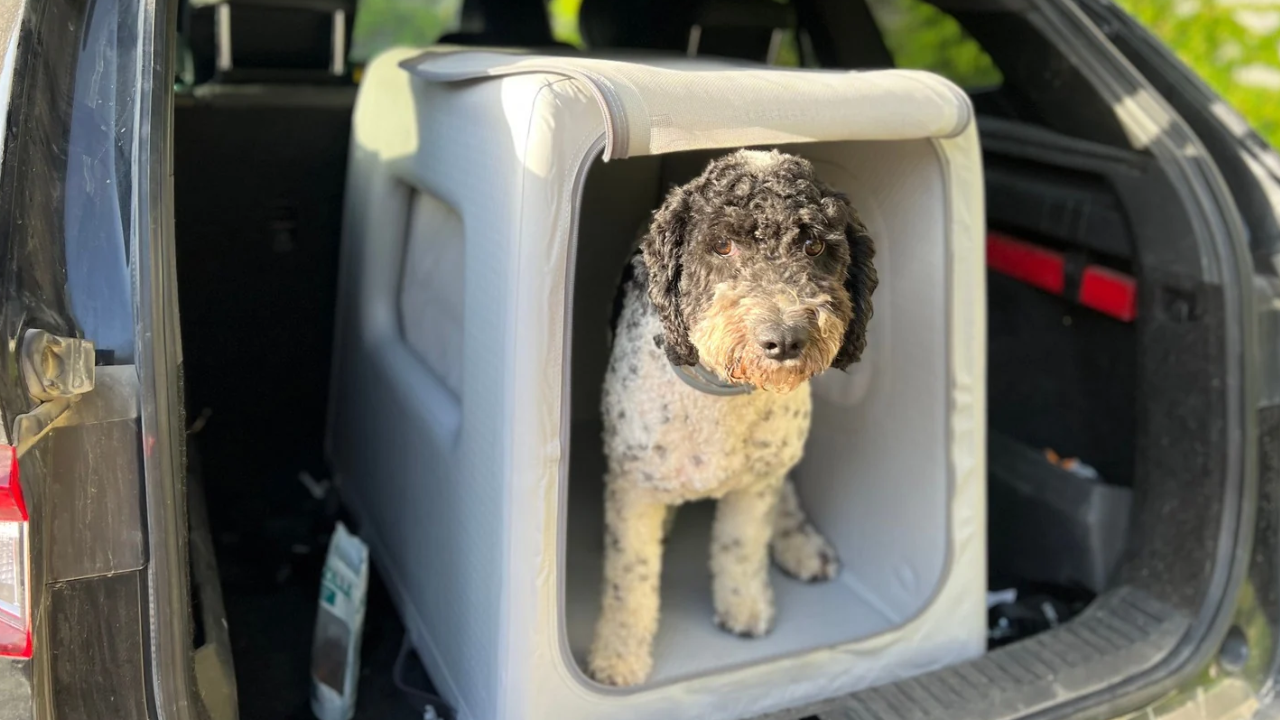
The cargo area (trunk) sits right in front of the rear crumple zone. In a rear-end collision, the back of the car is designed to collapse forward to protect the people in the cabin, and a kennel near the tailgate is in the direct line of impact.
If I were to have a dog in the cargo area again, I would go for a heavy-duty, double-walled, or aluminum kennel (like a Gunner G1, Lucky Duck, Cabela's Gun Dog, or Rock Creek Crates) that is CPS-certified and secured with strength-rated straps right against the back seat, not near the tailgate.
Our seating guide shows where the kennel can go in a sedan, SUV, or three-row car.
The difference in price between crash-tested kennels certified by the Center for Pet Safety is less significant than that between harnesses. Only a handful of kennels are CPS-certified, and only in specific sizes, so we've labeled each one clearly. We've also included a few well-built kennels that aren't CPS-certified.
Lightweight and built tough
Where to buy:
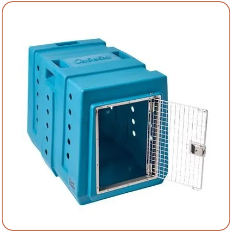
Best budget CPS-certified kennel
Where to buy:
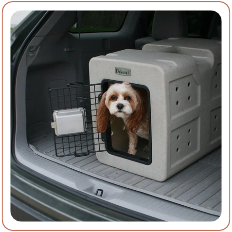
Large and XL sizes in two lines
Where to buy:
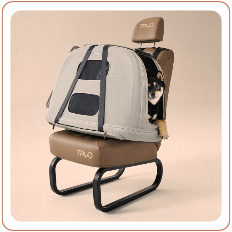
Installs with the car's anchors
Where to buy:
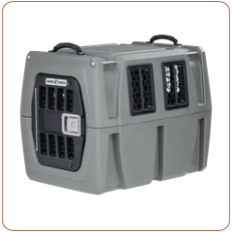
Gunner G1 Kennel (Certified by CPS )
Double-wall and 5-star certified in 3 sizes
Where to buy:
"We have the baby in the second-row middle seat and our mini Aussie in a Gunner kennel in the third row/trunk. It was a hefty investment but absolutely worth knowing they are both safe. We had to upgrade to a three-row SUV from a sedan, but I have zero worries we are all safe."
The only CPS-certified kennel for dogs up to 110 lb
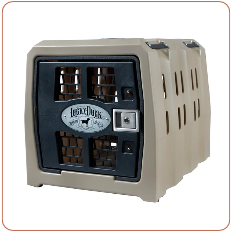
Where to buy:
Cabela's | Lucky Duck | Amazon
Rock Creek Aluminum Kennel (Certified by CPS in Medium)
Built to last
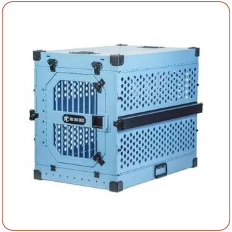
Where to buy:
Built-in crumple zone for rear-end crashes
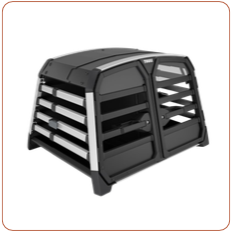
Where to buy:
"To say I am impressed is an understatement! My husband is active duty military and we travel and move A LOT! … I have found myself buying multiple cheap kennels each time we did a PCS move then donating or tossing them because they didn't work for us or they didn't survive the trip. There isn't much this kennel wouldn't survive. … The crate itself is SOLID! I feel my dog will be safer in that crate than I am driving. … The door opens fully and my favorite part, it's held open with a hydraulic opener!!! No more smashed fingers or struggling with a slamming door! This is the Cadillac of dog crates!!!"
- Amber, Thule Allax owner (Chewy review)
Absorbs crash forces like a car
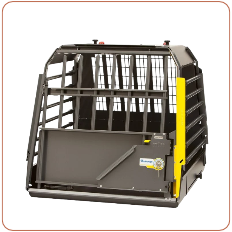
Where to buy:
Is it safe to put my dog's kennel in the cargo area (trunk)? Yes, if you use a crash-tested kennel secured with strength-rated straps and positioned against the back seat, not near the tailgate. The cargo area sits in front of the rear crumple zone, so a kennel near the tailgate is more exposed in a rear-end collision. CPS also recommends asking your car's maker whether the cargo anchors are strength-rated.
Can I put my dog's kennel in the truck bed? It's not recommended. In the truck bed, your dog is exposed to impact in a rear-end or side crash, can be thrown in a rollover, and has no protection from heat, cold, or weather. If you have no other option, use a heavy-duty, crash-tested kennel secured with strength-rated straps to the bed's anchor points, positioned against the back of the cab, not near the tailgate. Some states require dogs in truck beds to be crated or cross-tethered, so check your state's laws.
Do I need to replace my dog's kennel after a crash? Replace it after an accident or if it shows any structural damage, like cracks or a bent door. Check your kennel maker's guidelines, since some brands have their own crash replacement policies.
Keep reading: Choosing between a crash-tested harness, crate, and carrier | Best Crash-Tested Dog Car Harnesses | Best Crash-Tested Dog Carriers | How to Separate Your Dog and Baby in the Car
Car safety is one piece of it. But the work that matters most - training your dog before the baby arrives, getting the first introduction right, knowing how to handle a toddler who doesn't understand boundaries yet - that's where everything changes. If you're ready to go deeper:




Disclaimer: This blog is for educational purposes only. Please contact your veterinarian, a certified dog trainer, or a veterinary behaviorist if your dog's well-being is at risk or your dog's behavior poses a threat to you or other people.
Author: Dominika Knossalla-Pado, Certified Dog Trainer & Founder of Dog Meets Baby
Online resources to help your baby and dog get along—right from the start and as they grow up together.